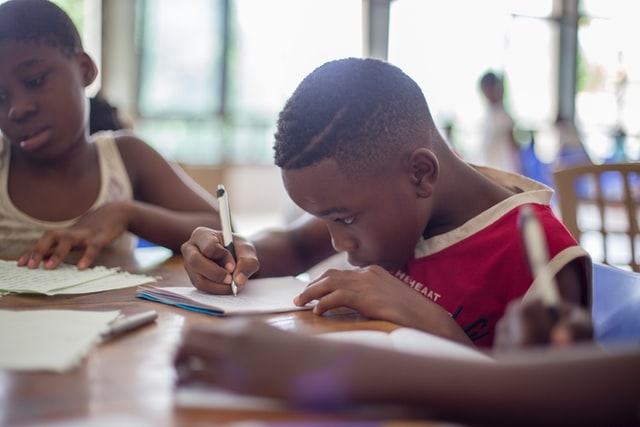
Remember when you were first taught how to write? With me it was signing the pictures I drew with wax crayons. I was three or four, and my mother taught me how to write my first name. I knew what it meant, but I didn’t care that the letter “N” only goes zigzag in a specific direction. It was the only word I was able to write until I entered first grade. And my mother had insisted that I hold the crayon in a specific way – NOT as if I wanted to grind something into the ground.
Don’t think writing came easy to me because I have made writing my livelihood. I fought the alphabet like a foe. Why? Our teachers had to teach us reading and writing in a “holistic” way; we were taught entire words, not letters. I knew my first-grade reader by heart. I had a photographic memory. But I couldn’t read a single word that came outside the context of a specific page. At one point, my mother was even called in because my teacher was despairing about my cluelessness. It took me the better part of my first grade to figure out that words are made up of letters, and that it is easy to create any word in one’s alphabetic mother language (I can’t speak for other languages) by simply placing letters into meaningful configurations. Once I was at that point, I became the most avid reader you can imagine. And reading invoked the writing process, as I had already been a story-teller.

I think it was at the end of first grade that we learned to write with a fountain pen. Not the ones that you dip into a little inkpot to pump the ink into a small tank inside the pen. The ones with tiny cartridges. I guess, I put way too much pressure on my fountain pens, as they constantly cracked right above the metal quill. My right hand’s first three fingers were always blue, and I went through an incredible number of fountain pens during my first years of school.
We were supposed to use fountain pens way into grammar school. And only the color of blue. Red ink was reserved for teachers, green ink for the school principal; you always hoped that green ink would only appear at the end of a school year on one’s certificate that ensured you’d made the class and were permitted to rise to the next grade. Only as of middle grade in grammar school (the equivalent to American junior high) were we permitted to also use ballpens and other ink colors. You bet, black, turquoise, and purple ink were huge favorites with us.
I remember that I used my fountain pen to write my finals in 13th grade. I began to use calligraphic quills when I went to university. I never learned calligraphy, though. My Master’s thesis had to be typed, and it was a painful process to do so even with an electronic typewriter. To this day, typewriting on a classic typewriter takes a toll on my ears, and I end up with serious inner ear pain and bad headaches. Which is probably a reason why I have still always preferred my fountain pen over a type writer.
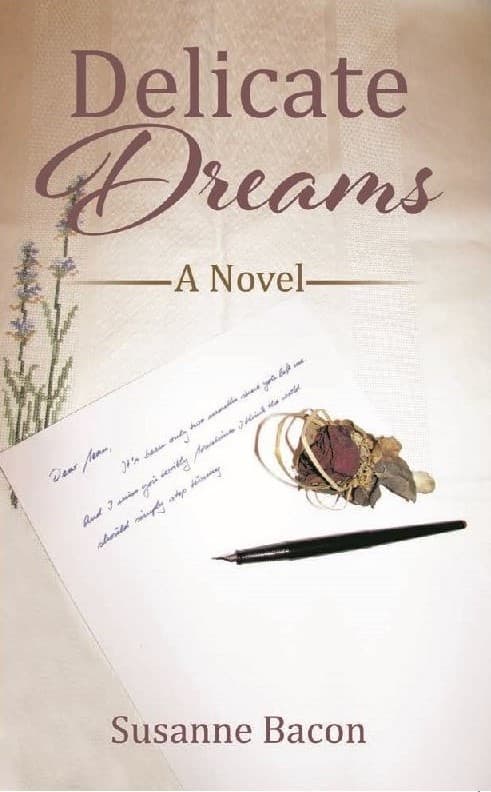
In came computers at workplaces and the very soft noise of computer keyboards. What a wonderful way to create texts, to be able to correct mistakes without ink-out and similar devices, to overwrite passages, to even have an automatic spelling control take over and hint at what you might want to change! Of course, you can set your mind to creativity way more if you don’t have to think of getting it right from the very first moment. Write, THEN correct!
All of my novel manuscripts are typed into computers. But the very first draft of the plot, a diagram, is always handwritten with whatever I get into my hands – a pencil, a ball pen, my fountain pen. I make it a point to write my journal with my fountain pen. As well as all of my personal letters. Or the personalized notes in my books. When I want to memorize something, I take notes with a pen.
Personal handwriting means a huge deal to me. It is not just an insight into a person’s character, it’s also something that can be very aesthetic. It’s a sign that somebody meant what they wrote for a specific recipient; it’s NOT a copy-paste thing that can be meaninglessly multiplied by the hundreds if need be.
Handwritten letters that tell a story are keepers. At one time, when nobody learns cursive in school anymore, they might become true artifacts with mysterious messages only specialists are able to decode. Just think of all our historical documents! And the handwritten papers that have been handed down in your family. Losing the craft of handwriting is losing our past.
https://ift.tt/3D29IJm
2021-11-05 21:08:00Z
CBMiPGh0dHBzOi8vdGhlc3VidGltZXMuY29tLzIwMjEvMTEvMDUvYWNyb3NzLXRoZS1mZW5jZS13cml0aW5nL9IBAA


0 Commentaires